ATTENTION ALL CUSTOMERS:
Due to a recent change in our pharmacy software system, all previous login credentials will no longer work.
Please click on “Sign Up Today!” to create a new account, and be sure to download our NEW Mobile app!
Thank you for your patience during this transition.

Get Healthy!
- Posted April 24, 2026
Eye Photos Might Offer Early Warning Of Chronic Health Problems, AI Study Finds
The eyes are the windows not only to the soul, but also to a person’s health, a new study says.
Premature aging of the retina could be a red flag for major diseases like diabetes or heart disease, researchers recently reported in the journal Communications Medicine.
They found that people had a higher risk of chronic disease if they had advanced aging of their retinas — the light-sensitive layer of cells that lines the back wall of the eye.
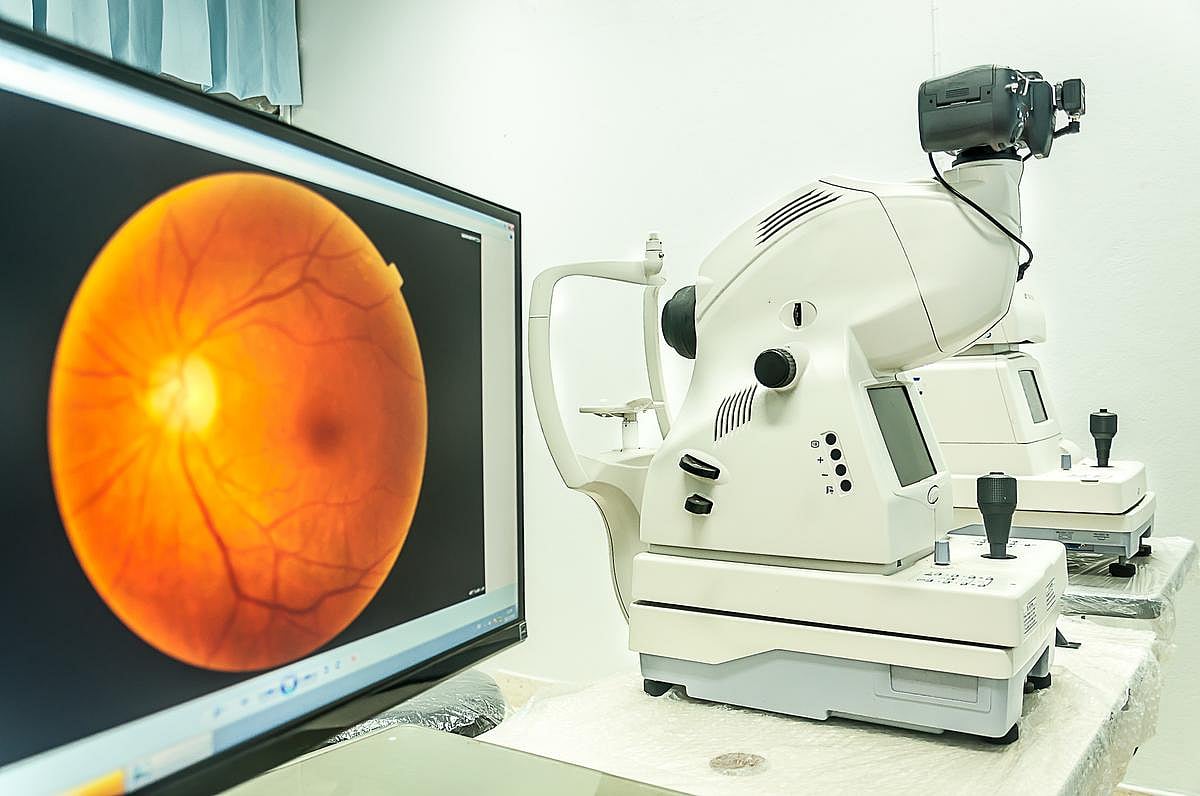
For the study, researchers trained an artificial intelligence (AI) model to estimate the wear-and-tear age of a person’s retina based on fundus images, which are photos of the eye’s back inner wall.
AI analysis of these photos could be used to help detect these diseases during regular check-ups, researchers said.
"Fundus images are non-invasive photos of the eye taken as part of regular health check-ups — so no additional work is needed," senior researcher Toru Nakazawa, a professor at Tohoku University in Japan, said in a news release. "Our model would be a nearly frictionless addition to a clinician's typical workflow."
For the new study, researchers trained the AI model to assess retinal age using more than 50,000 fundus images. A person’s retina can be older than their actual calendar age, if retinal aging is accelerated by unhealthy behaviors or disease.
The AI model became good at accurately predicting a person’s actual age based on their retina, but researchers found there was a larger gap between retinal age and calendar age for some people.
Analysis showed that people with diabetes, heart disease or a history of stroke tended to have a significantly larger gap between their retinal and calendar age.
The retinas of these people appeared older than expected.
"We are already planning a study that follows a cohort of over 10,000 individuals with continuous three-year follow-up to examine whether retinal age-related signals are associated with the future development of cardiovascular and other systemic diseases," Nakazawa said.
More information
The Cleveland Clinic has more on fundus photography.
SOURCE: Tohoku University, news release, April 21, 2026